What changes when a material is understood as a local resource, a craft and a long-term responsibility?
Begin at the source
A stone sample on a studio table tells only part of the story. Its colour and grain are visible; its journey, extraction and future maintenance are not. Before specifying a material, we need to understand where it comes from, who works it and what happens when a piece eventually needs replacing.
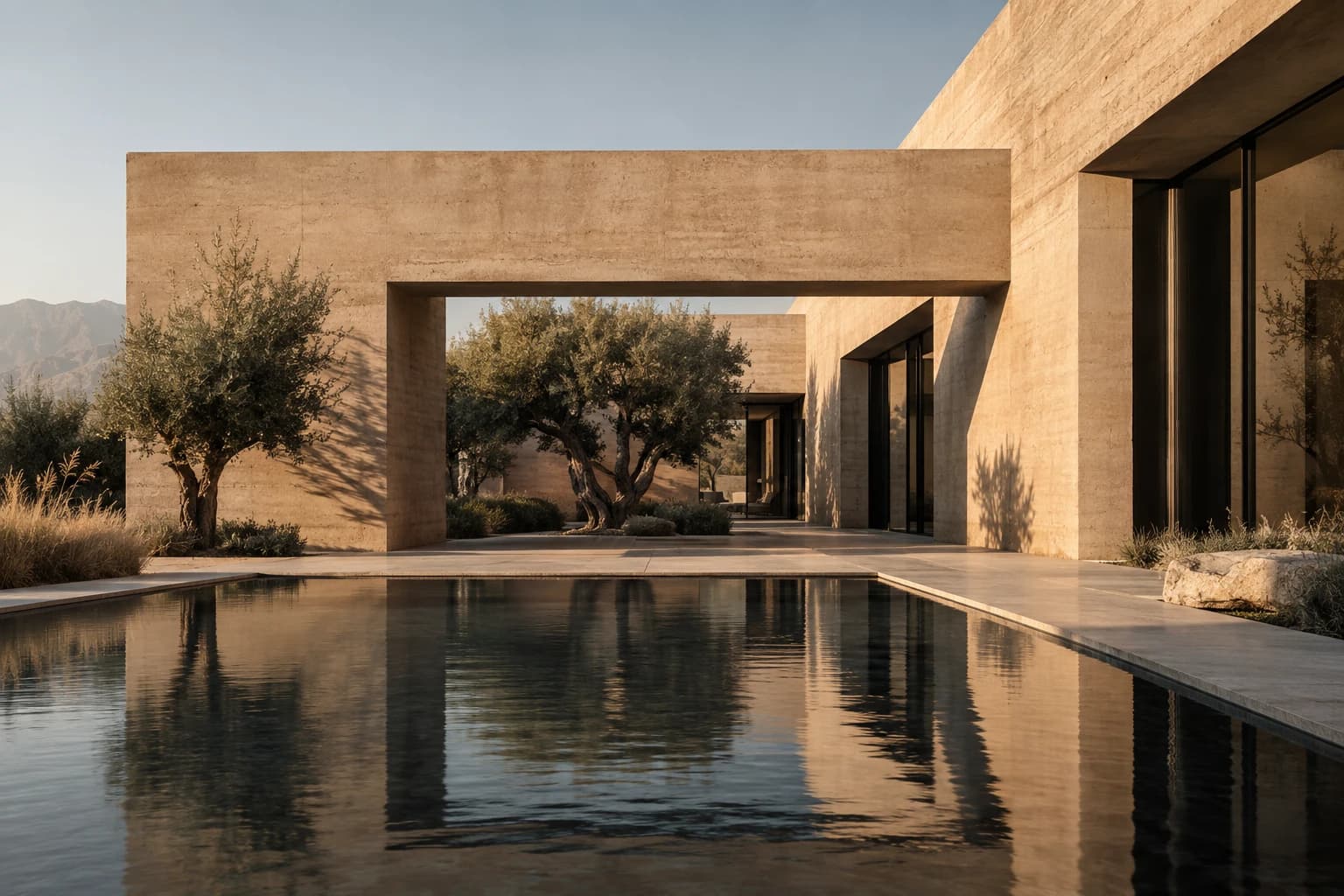
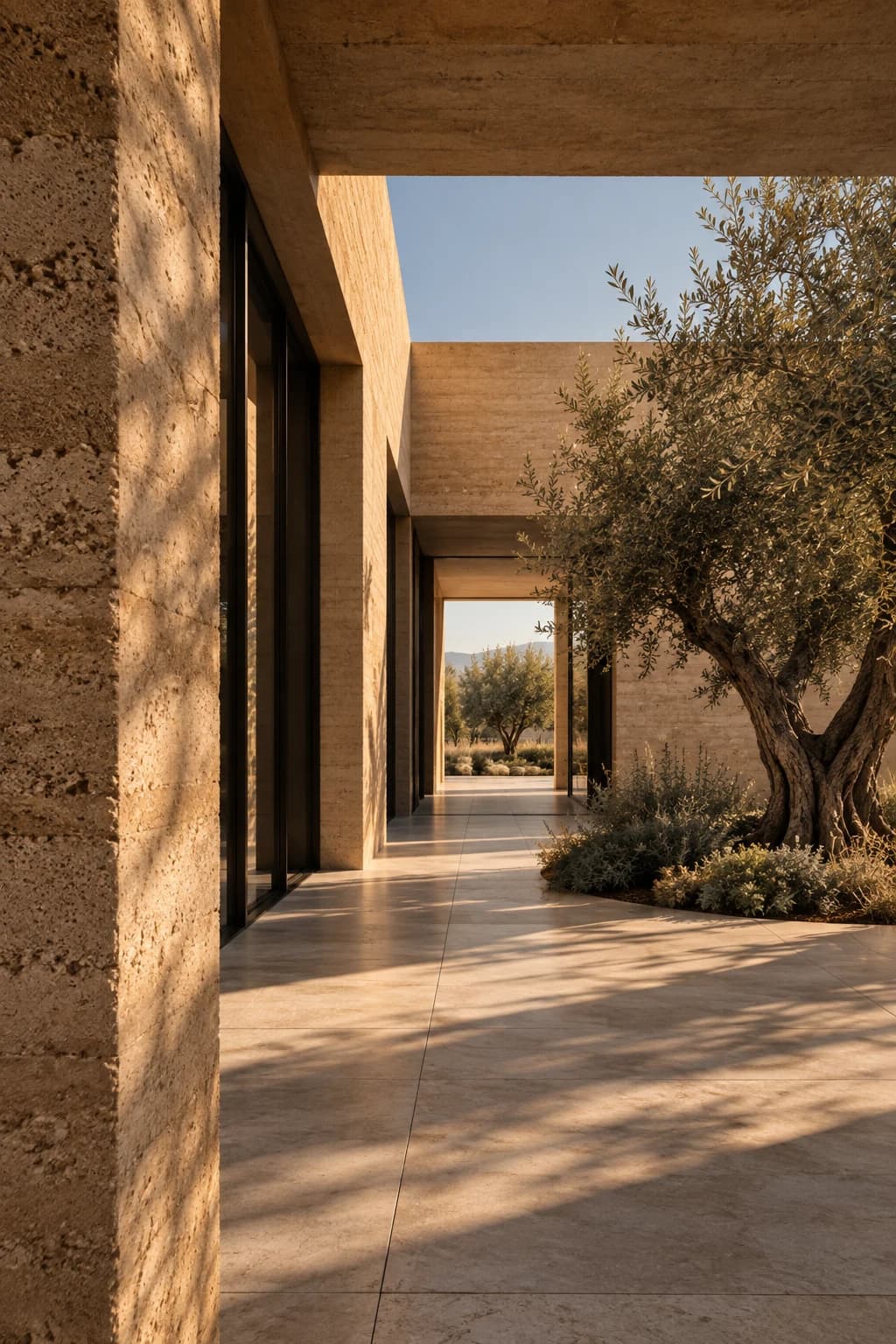
For the Casa Nera concept, stone is considered as a ground plane that connects interior and exterior. That continuity does not mean using the same finish everywhere. A sheltered living room and an exposed terrace have different requirements for slip resistance, drainage and cleaning. The visual relationship must survive those practical differences.
“The right material is not always the most remarkable one. It is the one that belongs.”
Draw the joint, not only the surface
A generous slab can be undone by an unresolved edge. We study the meeting of stone with doors, drainage channels and plaster early in the process. The joint is where tolerances become visible, and where a material either feels at ease or appears forced into place.
Mock-ups are useful because they reveal what drawings tend to conceal. A corner can be handled, a finish seen in changing light and a cleaning method tested. These small trials create a shared understanding between the design team and the people who will build and maintain the work.
Local is a question, not an answer
A short transport distance does not automatically make a material environmentally preferable. Extraction methods, processing energy, wastage and the quantity used all matter. We treat local sourcing as a starting point for investigation, not a substitute for evidence.
The most convincing material decisions often reduce complexity. A limited palette, a repeatable dimension and a repairable fixing can contribute more to a building’s long life than an elaborate finish. Stone is valuable when its use is proportionate to the job it performs.